2026-08-24 ·
How Buffalo Snowmelt Can Lead to Basement Mold
# How Buffalo Snowmelt Can Lead to Basement Mold
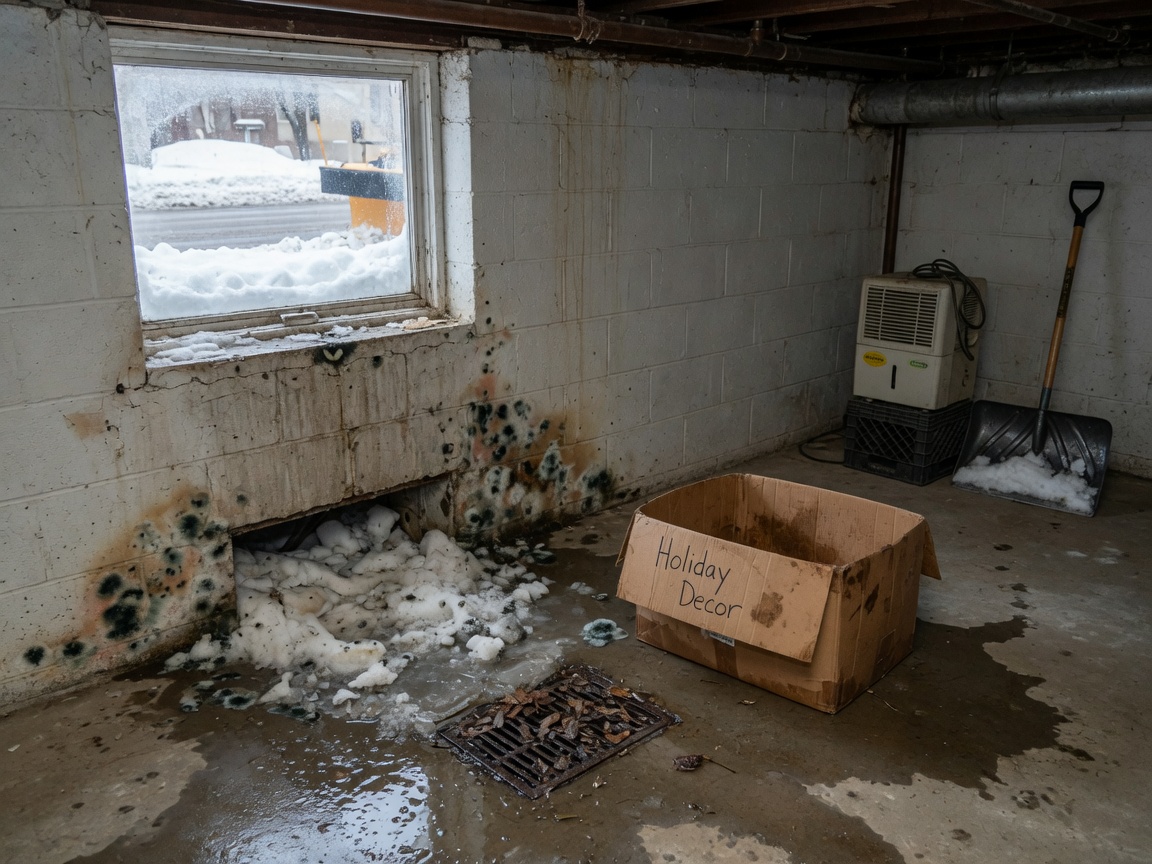
Buffalo snowmelt can lead to basement mold when thawing snow saturates soil beside the foundation, enters through cracks or overwhelms drainage, and leaves building materials damp for more than 24–48 hours. A pile of snow may appear harmless while frozen, but a warm spell or rain-on-snow event can release water faster than compacted or still-frozen ground can absorb it. Once moisture reaches drywall paper, wood framing, insulation, carpet backing, or stored cardboard, mold can begin growing out of sight. Buffalo’s humid continental climate and heavy lake-effect snow make this a recurring winter-to-spring concern rather than a problem limited to major floods.
Why Snowmelt Reaches Buffalo Basements
Snow often accumulates against houses after repeated shoveling, plowing, drifting, and roof runoff. During a quick thaw, frozen soil may shed water toward the building instead of accepting it. If the ground slopes inward, downspouts discharge near the wall, or gutters are blocked by ice and debris, water collects along the foundation and follows the easiest opening.
Common entry routes include:
- Foundation cracks and gaps around utility penetrations
- The joint where the foundation wall meets the basement floor
- Leaking basement windows or deteriorated window wells
- Floor drains or sewer lines affected by backups
- Sump pits that fill faster than the pump can discharge
- Porous masonry exposed to prolonged soil saturation
These conditions can occur across Erie County, but the visible symptom varies by property. A basement in Elmwood Village may show staining behind a finished wall, while a South Buffalo home may develop seepage along an exposed masonry joint. Homes in Riverside, Black Rock, Lovejoy, and Kaisertown can face the same basic sequence: snow piles, thaw, water entry, slow drying, and concealed growth.
Where Mold Hides After a Thaw
The largest puddle is not always where the most important damage occurs. Water can wick several inches into drywall, travel beneath vinyl flooring, or soak the bottom plate of a framed wall. Fiberglass insulation may look dry from the room side while holding moisture against the foundation. Finished basements are especially vulnerable because cavities limit airflow and conceal damp materials.
After snowmelt, inspect these locations closely:
- The lowest 6–12 inches of drywall and baseboard
- Carpet edges, padding, and tack strips along exterior walls
- Cardboard boxes sitting directly on concrete
- Rim joists and sill plates above the foundation
- Areas behind shelving, paneling, or stored furniture
- The underside of basement stairs and enclosed utility rooms
A musty odor that becomes stronger after the heat turns on can indicate hidden dampness, but odor alone does not identify the source or extent. Discoloration may also be dirt, mineral deposits, or old staining. A professional Mold Inspection can help distinguish a limited surface issue from moisture concealed inside an assembly. Owners of older properties can also use this guide to checking a Buffalo home for hidden mold.
What To Do During the First 48 Hours
Start by stopping additional water if it is safe to do so. Move snow away from the foundation, clear accessible downspout outlets, and confirm that discharge water is moving away rather than freezing beside the wall. Never enter standing basement water when electrical outlets, extension cords, appliances, or the service panel may be involved.
Then take a controlled approach:
- Photograph the water line and affected materials before moving belongings.
- Remove wet cardboard, saturated carpet padding, and other porous contents that cannot be dried promptly.
- Extract standing water and use dehumidification where electrical conditions are safe.
- Keep basement relative humidity around 30%–50% and verify progress with a hygrometer rather than touch alone.
- Check materials daily with a moisture meter when available; a dry surface can hide a wet wall cavity.
Fans are useful only after the water source is controlled and contaminated material has been assessed. Blowing air directly across visible growth can distribute spores and fragments. When water has affected multiple materials or entered wall cavities, Water Damage Restoration should address extraction and structural drying before cosmetic repairs begin.
When Cleanup Becomes Remediation
A small amount of condensation on a sound, nonporous surface is different from growth spread through drywall, insulation, or framing. Remediation may require containment, controlled removal of unsalvageable porous materials, detailed cleaning, and drying of the underlying structure. Painting over staining or applying household bleach to drywall does not correct moisture trapped behind the finished surface.
Seek a closer assessment when the affected area continues expanding, the odor returns after cleaning, drywall is soft, or occupants cannot safely reach the wet materials. Sewage-affected water and electrical hazards require additional precautions. Mold Remediation in Buffalo should focus on both contamination and the water pathway; removing visible growth without correcting seepage invites recurrence.
Project scope depends on accessibility, affected materials, containment needs, and how far moisture traveled. Readers comparing likely variables can review mold remediation cost factors in Buffalo. Testing is not automatically necessary for every visible patch, but it can be useful when the source is unclear, contamination may be hidden, or documentation is needed.
Preventing the Next Snowmelt Problem
Prevention begins before the next thaw. Keep shoveled and plowed snow from forming a bank against the house, especially near basement windows and downspout outlets. Where the property layout allows, maintain a clear path that sends meltwater away from the foundation. Check gutters after leaf fall and again when ice releases; a downspout extension is ineffective if it is crushed, disconnected, buried in snow, or aimed toward a walkway that drains back to the house.
Inside, elevate storage on washable shelving and leave space between belongings and foundation walls so changes remain visible. Test the sump pump before the spring melt, inspect its discharge route, and watch for recurring dampness at the same floor-wall joint. In North Buffalo, University Heights, Broadway-Fillmore, and Allentown, closely spaced buildings can limit exterior drainage options, making routine interior checks particularly important.
Treat a musty basement after snowmelt as a moisture warning, not a seasonal inevitability. Mold Remediation Buffalo serves Buffalo, NY, Monday–Friday 8am–6pm and Saturday 9am–2pm. The practical goal is straightforward: locate the entry point, dry the assembly completely, remove materials that cannot be restored, and correct the condition before the next Erie County thaw.