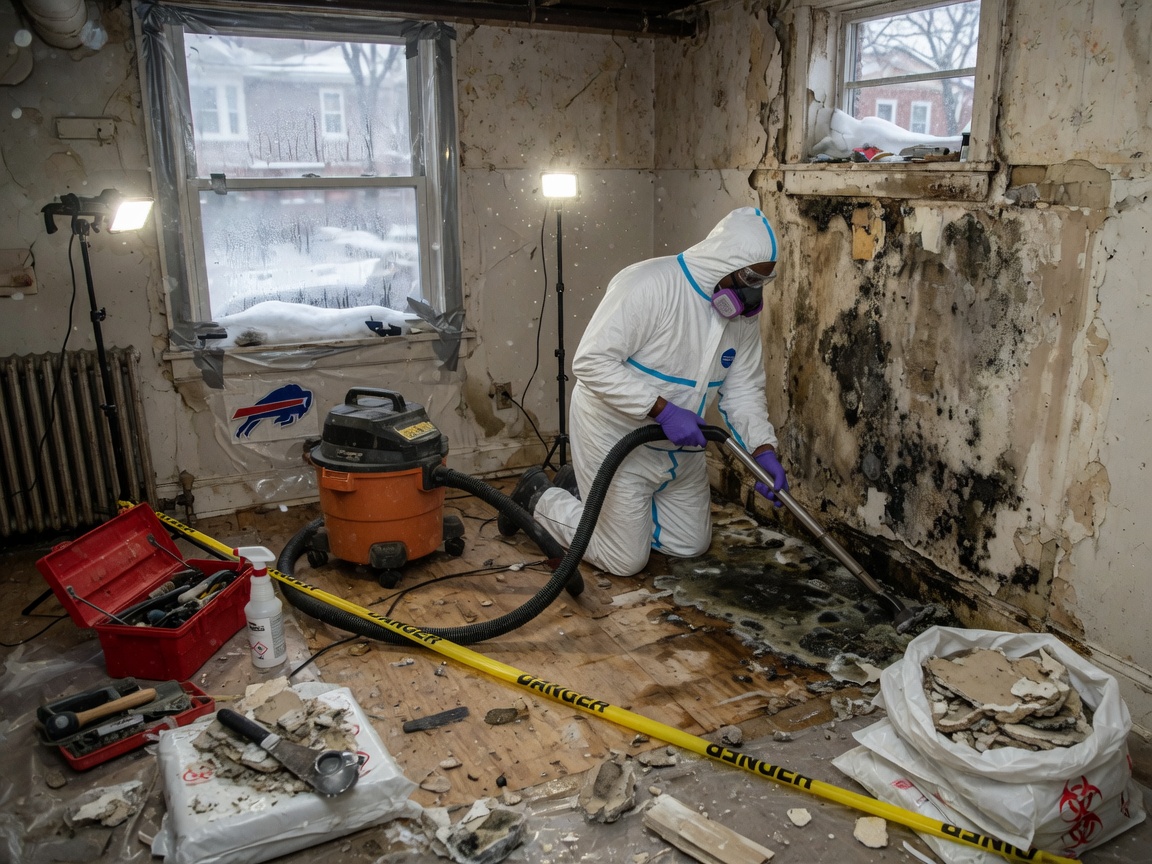
Mold Remediation Built Around Buffalo Buildings
Mold remediation in Buffalo, NY begins with understanding how water moves through the building. Older homes in Allentown, Elmwood Village, Black Rock and South Buffalo may combine stone foundations, plaster walls, wood framing and later renovations that conceal damp cavities. Basements can take on moisture through foundation seepage, plumbing leaks or humid summer air condensing on cool masonry. In winter, heavy lake-effect snow adds different risks: roof leaks, ice-related water entry and condensation where warm indoor air reaches poorly insulated attic surfaces. Effective remediation therefore addresses the moisture source before damaged porous materials are removed; otherwise, surface cleaning alone can leave growth active behind drywall, paneling or insulation.
Containment, Removal And Material Decisions
The work area should be isolated so demolition does not spread spores and contaminated dust into clean rooms. Depending on the scope, that can mean sealed polyethylene barriers, controlled air movement, HEPA-filtered equipment and a defined route for bagged debris. Drywall, ceiling tile, insulation and heavily affected carpet usually cannot be restored reliably once contamination has penetrated them. Solid framing, masonry and other structurally sound materials may be cleaned using methods appropriate to the surface, then dried and checked before reconstruction. In Riverside, Lovejoy, Kaisertown and Broadway-Fillmore, finished basements and layered wall assemblies deserve particular attention because mold can extend beyond the first visible stain.
New York Requirements And Safe Project Boundaries
New York regulates qualifying mold assessment and remediation work under state labor law, including separation between the assessor who defines the remediation plan and the contractor performing covered remediation. Applicability depends on project size, ownership and statutory exemptions, so the correct path should be established before disturbed materials expand the scope. Suspected asbestos-containing pipe insulation, floor tile, mastics or other legacy materials also require separate evaluation rather than being cut or sanded during mold removal. Properties near Delaware Park, the Buffalo Niagara Medical Campus, Canalside and Buffalo City Hall can vary widely in age and construction; the safe approach is to identify moisture, building materials and containment needs before demolition begins.
Technician insight
In Buffalo, the thing that catches most people out with mold remediation is treating a winter attic problem like a roof-cleaning problem. Heavy lake-effect snow may reveal leaks, but warm air escaping through ceiling penetrations can also condense on cold roof sheathing; unless that air pathway is addressed, surface treatment will not solve the cause. In older Erie County basements, I also look behind paneling and along stone-foundation edges before assuming the visible patch defines the full scope.
Mold Remediation Services We Offer
✓Basement Mold Remediation
Removal and cleaning plans for mold associated with seepage, condensation, plumbing leaks and damp finished basements. The service focuses on both visible growth and concealed edges behind baseboards, wall coverings and insulation.
✓Attic Mold Remediation
Targeted remediation for roof-sheathing and framing growth caused by leaks, air bypasses, inadequate ventilation or winter condensation. Correcting the moisture mechanism helps prevent cleaned surfaces from becoming damp again.
✓Post-Leak Mold Removal
Mold removal in Buffalo, NY after roof, plumbing or appliance leaks, including controlled opening of affected assemblies when necessary. Unsalvageable porous materials are separated from framing and other surfaces that may be suitable for cleaning.
✓Crawl Space Mold Remediation
Treatment of affected joists, subflooring and accessible foundation surfaces where ground moisture, seepage or humid air has created persistent dampness. Access, clearance and the condition of insulation influence the remediation plan.
✓Wall and Ceiling Mold Remediation
Containment and selective removal for mold around windows, exterior walls, ceilings and plumbing chases. The investigation looks beyond surface spotting for wet insulation, leaking lines and condensation inside the assembly.
✓HVAC-Area Mold Remediation
Remediation around air handlers, condensate lines, registers and nearby building materials when moisture has supported growth. This is distinguished from routine duct cleaning, which does not correct contaminated drywall, insulation or framing.
✓Commercial Mold Remediation
Planned containment and material removal for offices, retail spaces and other occupied properties in Buffalo and Erie County. Phasing and work-area isolation can help limit disruption while preserving clean sections of the building.
Mold Remediation Cost in Buffalo, NY
| Service | Typical Range | What Affects It |
|---|---|---|
| Small, Accessible Remediation Area | $500–$1,500 | Typical planning range for limited growth with straightforward access and little material removal; minimum service charges and containment needs affect cost. |
| Wall Or Ceiling Remediation | $1,000–$4,000 | Varies with cavity access, insulation, plumbing or roof involvement, containment and the amount of drywall removed. |
| Attic Mold Remediation | $1,500–$6,000+ | Roof pitch, access, sheathing area, insulation handling and the underlying ventilation or condensation problem drive the range. |
| Basement Mold Remediation | $2,000–$7,500+ | Finished walls, stored contents, stone or block foundations, repeated seepage and widespread framing involvement can increase scope. |
| Large Or Multi-Room Remediation | Custom Quote | Requires a defined scope because containment zones, regulated materials, occupant protection and reconstruction needs vary substantially. |
Ranges are typical for Buffalo, NY and confirmed with an exact written quote before any work starts.
How it works
- 1
Define The Affected Area
Review visible damage, water history and any independent assessment or remediation plan. Concealed spaces and adjacent materials are considered so the scope is not based only on what appears at the surface.
- 2
Control Moisture And Contain
Address active water entry where practical, protect unaffected areas and establish containment appropriate to the project. Air movement is managed to reduce the migration of dust and spores during removal.
- 3
Remove And Clean
Discard unsalvageable porous materials using controlled methods, then HEPA vacuum and clean suitable structural surfaces. Methods are selected for the material rather than relying on indiscriminate spraying or cosmetic stain coverage.
- 4
Dry And Inspect
Confirm that remediated materials are dry and inspect the work area for remaining dust, debris or visible growth. When required by the project, an independent assessor performs post-remediation verification.
- 5
Prepare For Restoration
Document areas ready for repair and identify moisture-control measures that should be completed before new drywall, insulation, flooring or finishes are installed.
Pricing
Pricing depends less on the visible stain than on containment size, demolition depth, access and the amount of material that must be removed. The ranges below are broad Buffalo planning figures, not quotes; independent assessment, laboratory testing, asbestos evaluation, water-source repairs and reconstruction may be separate.