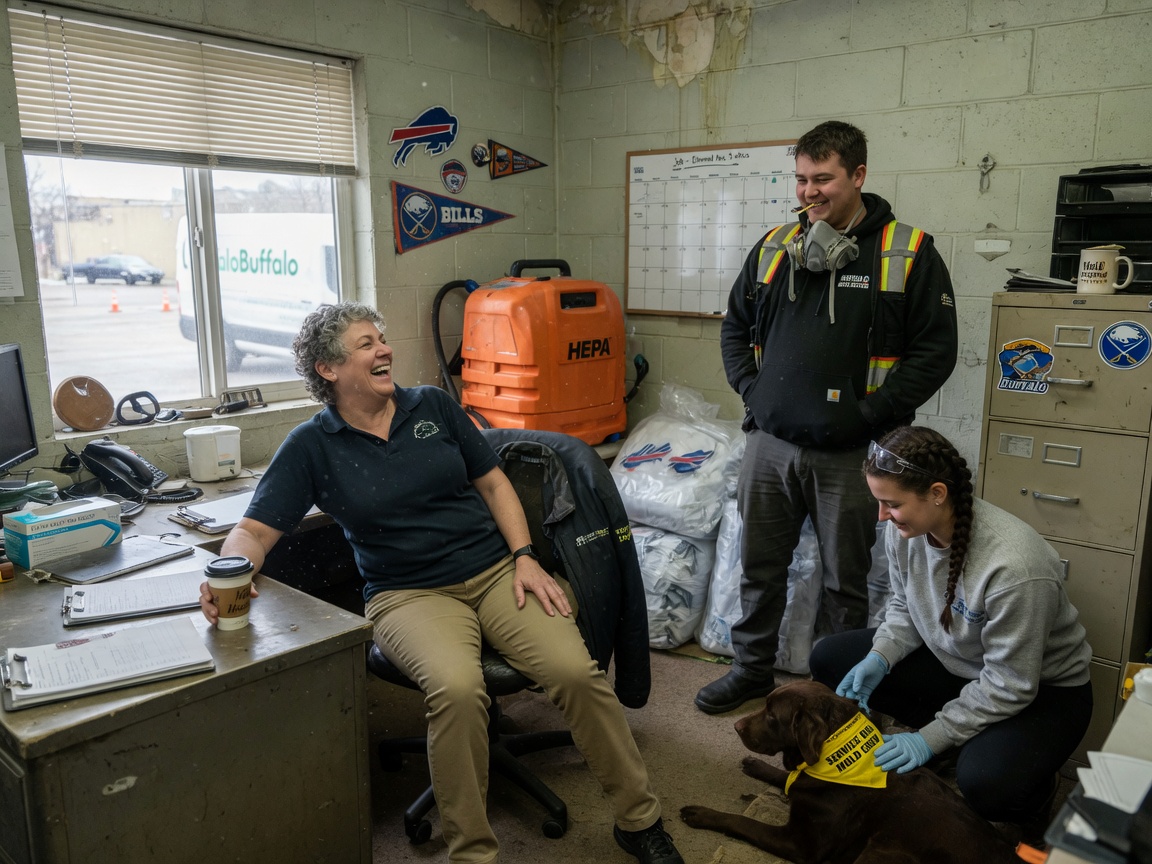
Mold Remediation Buffalo provides mold remediation in Tonawanda, NY, with attention to the moisture patterns found near the Niagara River, Erie Canal and Ellicott Creek. Tonawanda’s older wood-frame homes often have stone or masonry basements, enclosed porches and finished attic spaces where seepage or condensation can remain hidden. We inspect the affected materials, identify the moisture source and outline the remediation scope before work begins. Service is available Monday through Friday from 8am–6pm and Saturday from 9am–2pm.
Heavy lake-effect snow is a major factor in Tonawanda mold removal. Wind-driven snow can enter aging roof or soffit areas, while thaw cycles expose foundation seepage, gutter problems and leaks around basement windows. Humid summers can also keep below-grade rooms damp, especially where stored belongings restrict airflow along exterior walls. Our approach accounts for porous materials, access constraints and whether moisture is still active, rather than treating visible staining as the entire problem.
Tonawanda sits at Erie County’s northern edge, giving residents practical access to Buffalo, Amherst, Cheektowaga and Niagara Falls. We serve properties around Main Street, Niagara Street, Niawanda Park and the neighborhoods near Tonawanda High School. When mold is discovered, containment and material handling are planned around the building layout—important in closely spaced houses, occupied duplexes and homes with narrow basement stairs. Each quote is based on conditions that can be inspected, including the affected area, material type and source of moisture.
Around * Tonawanda
We regularly work near:
- 📍Niawanda Park
- 📍Gateway Harbor Park
- 📍Tonawanda High School
- 📍Main Street
- 📍Niagara Street
- 📍Ellicott Creek Park
Mold Remediation Buffalo NY in * Tonawanda — Local Notes
- •Basements near the Niagara River, Erie Canal and Ellicott Creek can remain humid even without obvious standing water. Remediation planning should include the source of seepage or condensation so growth does not quickly return.
- •Many Tonawanda houses have older masonry foundations, wood framing and low-clearance basement areas. These conditions can make access, containment and removal of affected porous material more involved than work in an open modern basement.
- •Lake-effect snow, ice buildup and spring thaw can reveal roof-edge leaks, wet attic insulation and damp foundation walls. Attics and basements should be checked beyond the first visible patch.
- •Closely spaced homes and compact lots can limit equipment placement and debris routes. Containment and removal paths should be planned to protect occupied rooms and neighboring property.