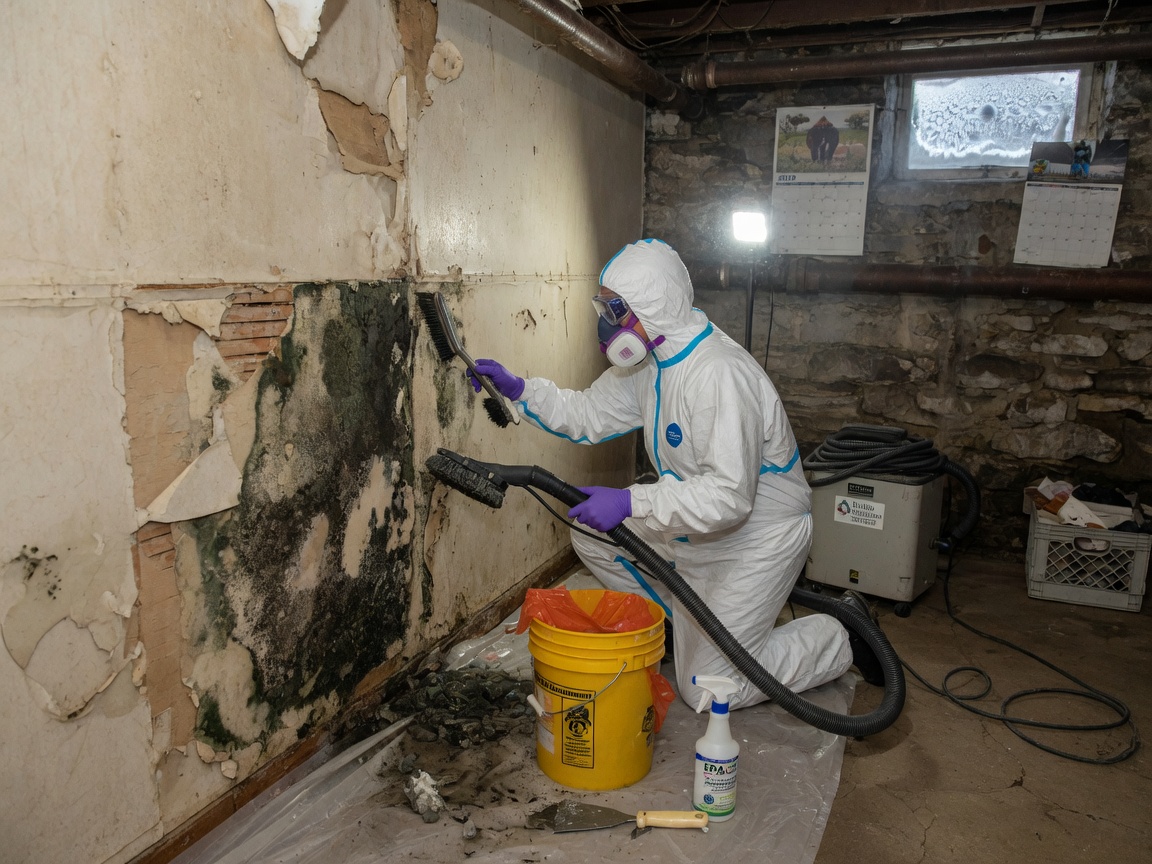
Black mold is a description of appearance, not a laboratory identification or a measure of danger. Dark growth may include several mold species, and color alone cannot determine health risk. Effective black mold removal in Buffalo, NY begins by finding the moisture source, establishing containment and deciding which materials can be cleaned. Sound framing and some sealed surfaces may be recoverable; moldy drywall, insulation, ceiling tile and other porous materials often require controlled removal. Painting or spraying over visible growth does not solve the problem and can conceal contamination while moisture continues behind the finish.
Buffalo’s older housing stock adds complications that are easy to miss. In Allentown, Elmwood Village, Black Rock and South Buffalo, finished basements, plaster walls, masonry foundations and tightly packed wall cavities can hide moisture migration. Heavy lake-effect snow may accumulate against foundations or enter attic assemblies, while spring thaw and humid summer air can keep masonry and wood damp. Around Riverside, Lovejoy, Kaisertown and Broadway-Fillmore, the visible patch may be only the exposed edge of growth behind baseboards, paneling or stored belongings. Removal planning therefore accounts for material layers, airflow paths and access—not simply the number of visible square feet.
Containment should be sized to the work, with dust and debris kept away from occupied rooms and HVAC returns. New York’s mold requirements can apply based on the affected area and project circumstances; larger regulated projects generally require qualified mold assessment and remediation roles, with assessment kept independent from remediation. Owners should not disturb a substantial area before determining what rules apply, particularly in rental or multi-unit properties. Service is available across Erie County, including North Buffalo, University Heights and areas near Delaware Park, Canalside, Buffalo City Hall and the Buffalo Niagara Medical Campus, as well as Amherst, Cheektowaga and Niagara Falls.
Technician insight
In Buffalo, the thing that catches most people out with black mold removal is the gap between what appears after winter and where the moisture actually traveled. Heavy lake-effect snow, ice buildup and spring thaw can wet an attic edge or older masonry wall, yet the first visible growth may show up months later behind basement paneling or along a ceiling. Removing that visible patch without opening the right transition point often leaves the damp material untouched.
Black Mold Removal Services We Offer
✓Basement Black Mold Removal
Removal planning for mold on joists, masonry-adjacent finishes, stored materials and finished basement walls. The work focuses on separating cleanable structural materials from porous items that cannot be reliably restored.
✓Attic Black Mold Removal
Addresses dark fungal growth on roof sheathing and framing caused by roof leaks, snow intrusion, air leakage or poor moisture control. Ventilation and insulation conditions are reviewed so cleaning is not treated as a stand-alone cure.
✓Wall Cavity Mold Removal
Controlled access to mold hidden behind drywall, plaster, baseboards or paneling. Limited demolition helps expose the true boundary while reducing unnecessary disturbance to surrounding finishes.
✓Bathroom Mold Remediation
Treats recurring growth around ceilings, wall finishes, vanities and plumbing penetrations. The service distinguishes surface condensation from concealed leakage before damaged materials are removed.
✓Crawlspace Mold Removal
Removes affected insulation and treats accessible framing where damp soil, plumbing leaks or humid air support growth. Moisture entry and air movement are considered before the space is closed again.
✓Post-Leak Mold Removal
Remediation following plumbing failures, roof leaks, ice-related water entry or appliance overflows. Materials are evaluated by porosity and condition rather than assumed dry because the surface feels normal.
✓HVAC-Adjacent Mold Remediation
Addresses contamination around registers, air handlers and nearby building materials without assuming every dark deposit inside a duct is mold. Suspected system contamination requires careful evaluation to avoid spreading particles through the building.
Black Mold Removal Cost in Buffalo, NY
| Service | Typical Range | What Affects It |
|---|---|---|
| Small Accessible Area | $500–$1,500 | Typical for a limited area with straightforward access and little material removal; regulatory requirements and the moisture repair can change the total. |
| Contained Wall Or Basement Area | $1,500–$5,000 | Driven by containment, drywall or insulation removal, concealed spread, debris handling and access around utilities or stored contents. |
| Attic Or Multi-Area Remediation | $3,000–$10,000+ | Roof geometry, sheathing coverage, insulation handling, limited access and the number of containment zones are major variables. |
| Independent Mold Assessment Or Testing | $300–$900+ | When required or requested, assessment is generally a separate service; sampling count, reporting and project size affect the fee. |
Ranges are typical for Buffalo, NY and confirmed with an exact written quote before any work starts.
How it works
- 1
Moisture And Material Evaluation
We identify visible growth, likely concealed boundaries, affected materials and the water or humidity condition supporting it. Access limitations and signs of spread into adjoining rooms are documented before disturbance begins.
- 2
Scope And Containment Planning
The work area, removal methods and containment approach are matched to the affected area and occupancy. Where New York regulatory requirements apply, the project must follow the required assessment and remediation framework.
- 3
Controlled Removal And Cleaning
Unsalvageable porous materials are removed carefully, while appropriate structural surfaces are cleaned using methods suited to the substrate. Work practices prioritize source removal rather than stain concealment.
- 4
Drying And Detailed Cleanup
The area is cleaned, debris is contained and remaining materials are allowed to reach suitable dry conditions. Rebuilding should wait until the moisture source has been corrected and the assembly is ready to close.
- 5
Completion Review
Accessible treated surfaces and moisture-related concerns are reviewed with the owner. Recommendations may include plumbing, roofing, drainage, ventilation or insulation work outside the remediation scope.
Pricing
Black mold removal pricing depends on the affected area, containment needs, material layers, access and whether growth extends behind finishes. Small, accessible areas may remain in the low four figures, while multi-room, attic or heavily finished-basement projects can cost several thousand dollars or require a project-specific scope. Independent assessment, reconstruction, plumbing and roof repairs may be separate.