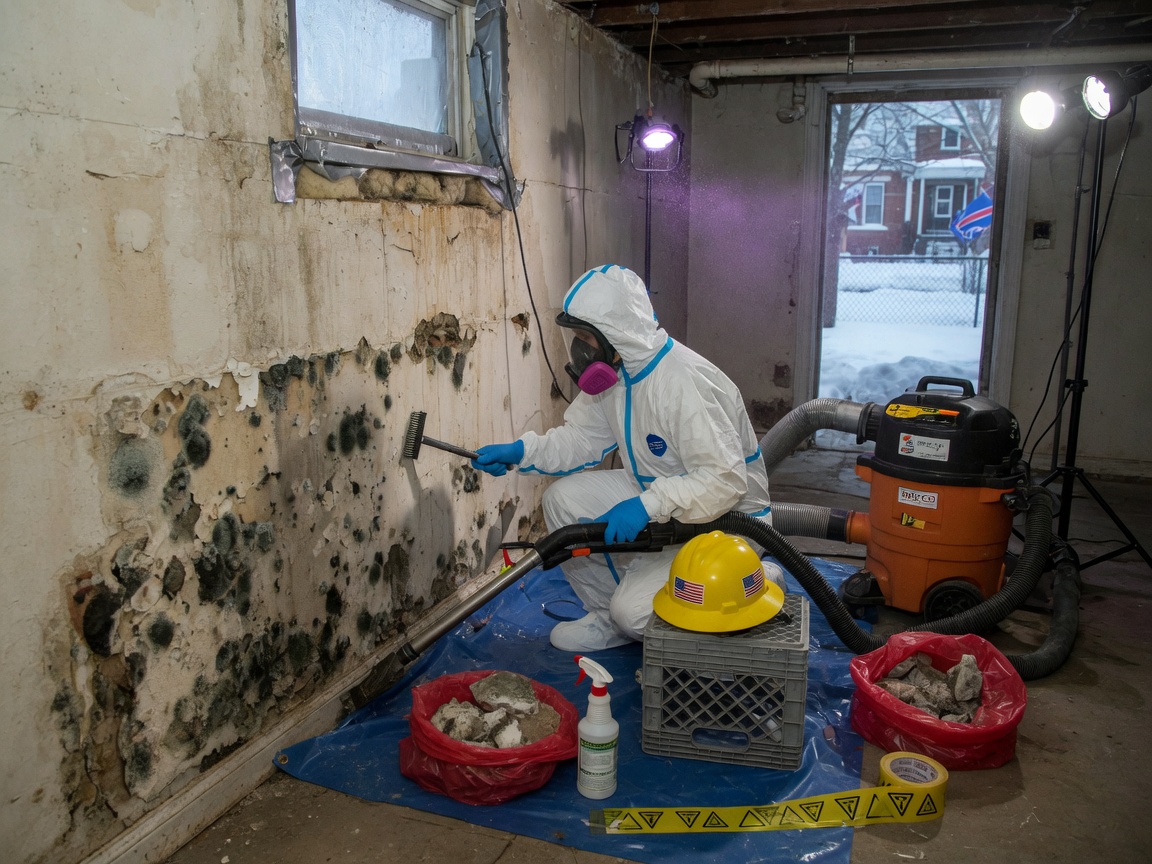
Mold removal in Buffalo, NY starts with finding the moisture pathway, not simply treating the visible staining. Heavy lake-effect snow can load roofs, enter vulnerable flashing and later produce hidden attic or wall moisture during thaw cycles. In basements, seepage, condensation on cold masonry and poorly managed downspouts can keep framing or stored contents damp. We evaluate the visible growth, surrounding materials and likely water source before defining the work area. That distinction matters because surface growth on sound, nonporous material may be cleanable, while mold embedded in drywall, insulation or deteriorated fiberboard often requires controlled removal rather than cosmetic spraying.
Buffalo’s housing varies considerably from older homes in Allentown, Elmwood Village, Black Rock and Broadway-Fillmore to properties across North Buffalo, South Buffalo, Lovejoy, Kaisertown and Riverside. Older plaster assemblies, wood lath, masonry foundations and multiple renovation layers can conceal moisture or create cavities that are difficult to dry. A finished basement near Delaware Park may require a different approach than an attic affected by ice-dam leakage in University Heights. We avoid unnecessary demolition by checking material condition and following the moisture trail, but we also do not leave softened drywall, contaminated insulation or swollen composite materials in place when they cannot be cleaned reliably.
Containment is central to responsible mold removal because careless demolition can spread dust and spores into clean rooms. Depending on scope, the work may involve isolating the area, controlling airflow, protecting travel paths, removing unsalvageable porous materials and cleaning remaining structural surfaces with appropriate methods. Mold should not be painted over, and bleach alone is not a dependable solution for porous building materials. Where asbestos-containing materials or lead-painted components may be disturbed in older Erie County buildings, that hazard must be evaluated separately before demolition proceeds. Mold remediation does not replace plumbing, roofing, drainage or structural repairs needed to stop recurring water entry.
Our service area includes Buffalo and nearby Niagara Falls, Amherst and Cheektowaga, where seasonal humidity, frozen conditions and rapid snowmelt can complicate drying. After removal, the affected space must reach stable moisture conditions before reconstruction; closing a wall while framing remains damp can recreate the problem out of sight. We explain what can be cleaned, what should be discarded and which repairs fall outside mold removal. Appointments are available Monday through Friday from 8am to 6pm and Saturday from 9am to 2pm. The result is a defined scope based on materials and moisture conditions rather than a one-size-fits-all treatment.
Technician insight
In Buffalo, the thing that catches most people out with mold removal is the delay between winter water entry and visible growth. Lake-effect snow can feed a roof or masonry leak during a thaw, while plaster, wood lath and layered finishes in older Erie County homes hide the damp area. Opening only the visible stain often misses wet insulation or framing extending beyond it, so the moisture path needs to be mapped before removal begins.
Mold Removal Services We Offer
✓Basement Mold Removal
Removal and cleaning for mold associated with foundation seepage, condensation, sump issues or damp finished walls. The scope distinguishes cleanable masonry and framing from drywall, insulation and contents that may need disposal.
✓Attic Mold Removal
Targeted remediation for roof leaks, ice-dam moisture, bath-fan discharge and inadequate ventilation. We address affected sheathing and framing while identifying the moisture condition that must be corrected to prevent recurrence.
✓Crawl Space Mold Removal
Controlled cleaning and material removal in confined areas affected by ground moisture, plumbing leaks or humid air. Access, insulation condition and the ability to dry the structure determine the practical scope.
✓Drywall Mold Removal
Selective removal of mold-affected drywall and other porous finishes when surface cleaning is not reliable. Containment and protected debris handling help keep demolition dust from reaching occupied rooms.
✓Post-Leak Mold Remediation
Removal for growth that develops after plumbing failures, roof leaks or appliance overflows were not dried quickly enough. We trace the affected boundary beyond the obvious stain and verify that remaining materials are dry before closure.
✓Commercial Mold Removal
Planned containment and remediation for offices, retail spaces, rental properties and other commercial interiors. Work areas and access can be phased to reduce disruption while maintaining separation from occupied sections.
✓Contents Cleaning and Disposal
Sorting guidance for belongings exposed in a mold-affected space, including identification of items that may be cleaned and porous contents that are unlikely to be recoverable. Final decisions depend on material, condition and exposure.
Mold Removal Cost in Buffalo, NY
| Service | Typical Range | What Affects It |
|---|---|---|
| Small Localized Mold Removal | $500–$1,500 | Typical for a limited, accessible area with a known moisture source and little or no demolition. |
| Attic Mold Remediation | $1,500–$6,000 | Roof pitch, access, affected sheathing area, insulation and ventilation corrections can move the price. |
| Basement Mold Remediation | $1,500–$7,500 | Finished walls, stored contents, seepage, masonry conditions and the amount of porous material removed affect cost. |
| Multi-Room Or Extensive Remediation | $5,000–$15,000+ | Large containment zones, concealed cavities, substantial demolition and difficult access increase labor and disposal requirements. |
| Independent Mold Testing Or Clearance | $300–$900+ | When requested or required, third-party pricing varies by sampling plan, number of areas and laboratory analysis; this is separate from removal. |
Ranges are typical for Buffalo, NY and confirmed with an exact written quote before any work starts.
How it works
- 1
Inspect The Moisture Source
We review visible growth, water history, material condition and likely moisture pathways such as roof entry, plumbing leaks, foundation seepage or condensation.
- 2
Define The Remediation Scope
The work plan identifies containment boundaries, materials that can be cleaned, materials requiring removal and any access or safety issues that must be resolved first.
- 3
Contain And Remove
The affected area is separated as appropriate, travel paths are protected and unsalvageable porous materials are removed without uncontrolled demolition.
- 4
Clean And Dry
Remaining structural surfaces are cleaned using methods suited to the material, and moisture conditions are checked before the area is considered ready for reconstruction.
- 5
Review Prevention Priorities
We explain the repairs or operating changes needed to control recurrence, such as correcting leaks, improving drainage, venting moisture outdoors or managing basement humidity.
Pricing
Mold removal pricing depends on containment needs, affected square footage, material type, access and how much demolition is required. Small, accessible areas cost less than finished basements, tight attics or projects involving several rooms. Moisture-source repairs, reconstruction, hazardous-material testing and independent clearance testing are typically separate from remediation pricing; an on-site assessment is the soundest basis for a written quote.