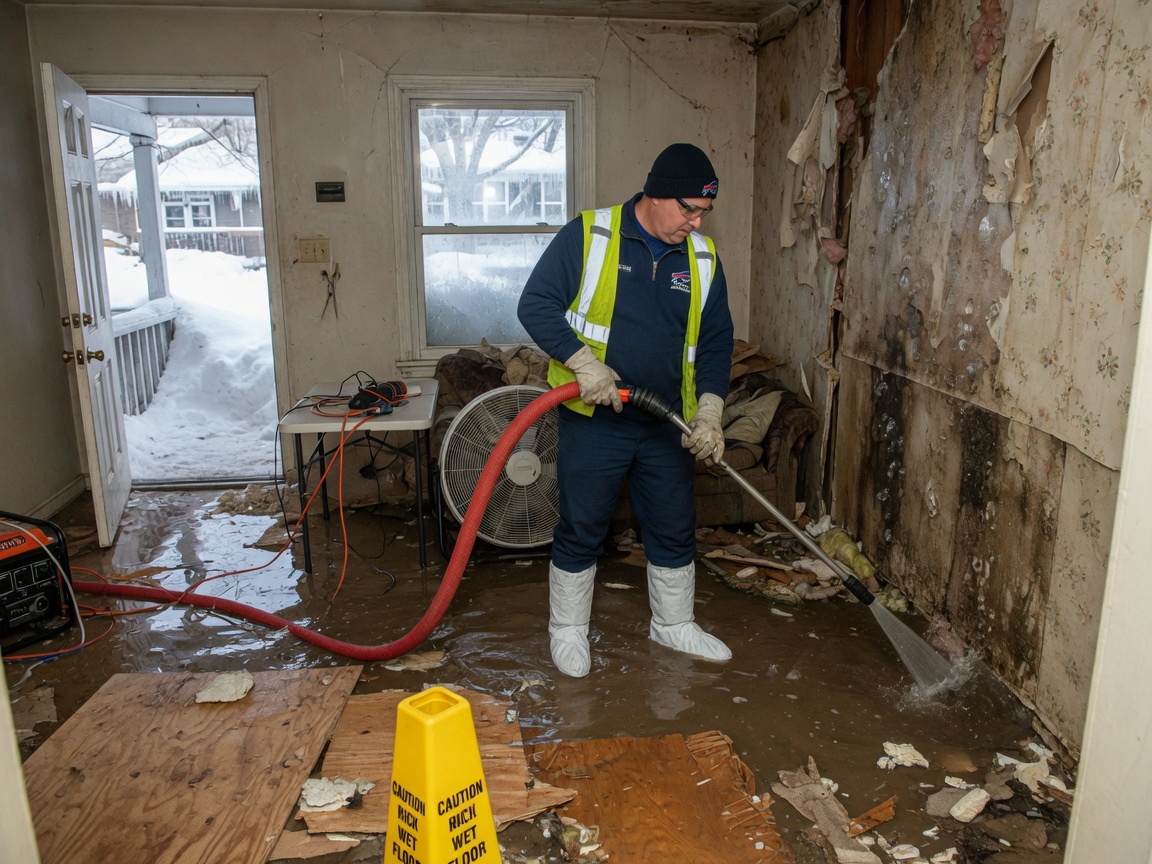
Water damage restoration in Buffalo begins with finding where the water traveled, not simply removing what is visible. Water from a supply-line break, failed appliance or roof leak can move behind baseboards, under finished flooring and through wall cavities before appearing downstairs. We use moisture readings to define the affected area, remove standing water and determine which materials can be dried in place. Clean water may become increasingly contaminated after contact with flooring, debris or building cavities, so delaying extraction can change the scope. Plumbing or roof defects must also be stopped before drying equipment can produce a stable result.
Buffalo’s humid continental climate creates distinct drying problems. Heavy lake-effect snow can enter around roof defects, accumulate against foundations and produce substantial moisture during thaw cycles. In older housing found across Allentown, Elmwood Village, Black Rock and South Buffalo, water may pass through plaster, wood lath, board sheathing and layered floor assemblies that dry differently from modern drywall. Wet plaster is not automatically unsalvageable, but its condition, attachment and moisture level require careful evaluation. Materials should not be closed behind new finishes until the assembly has reached an appropriate dry condition, or trapped moisture can support microbial growth.
The water source determines the safety plan. A clean supply leak is handled differently from groundwater or a sewer backup, which can carry microorganisms and require controlled removal of porous materials. Basement losses in Riverside, Lovejoy, Kaisertown and Broadway-Fillmore may also involve water moving through masonry walls or floor joints, so extraction alone will not correct recurring seepage. Where demolition could disturb suspect asbestos-containing materials or lead-painted surfaces, especially in older buildings, appropriate evaluation should occur before broad removal. Electrical hazards, sagging ceilings and contaminated standing water are reasons to keep occupants out of the affected space until conditions are assessed.
Our restoration approach connects drying with mold prevention rather than treating them as separate problems. After extraction, air movers and dehumidification are positioned around the actual moisture pattern, with progress verified through repeat readings. Properties near Delaware Park, Canalside, Buffalo City Hall and the Buffalo Niagara Medical Campus can differ greatly in construction and access, so equipment plans must fit the building rather than follow a fixed formula. Service is available across Erie County, including North Buffalo and University Heights, as well as nearby Amherst, Cheektowaga and Niagara Falls. Business hours are Monday through Friday, 8 a.m. to 6 p.m., and Saturday, 9 a.m. to 2 p.m.
Technician insight
In Buffalo, the thing that catches most people out with water damage restoration is the moisture left behind after a frozen-pipe break or lake-effect snow thaw. In older Allentown and Black Rock properties, water can run behind plaster and wood trim, then settle between floor layers while the visible surface looks dry. I would rather verify those concealed areas with moisture readings than remove equipment based only on touch or appearance.
Water Damage Restoration Services We Offer
✓Emergency Water Extraction
Standing water is removed from accessible floors, basements and affected rooms to limit migration into walls and adjacent materials. The source and contamination category are considered before extraction begins.
✓Basement Water Damage Cleanup
Cleanup addresses water on slabs, masonry, framing and stored-area surfaces after seepage, plumbing failures or snowmelt. We also identify wet materials that extraction alone will not adequately dry.
✓Structural Drying and Dehumidification
Air movement and dehumidification are planned around measured moisture in drywall, plaster, wood and flooring assemblies. Follow-up readings help confirm progress before equipment is removed.
✓Sewage Backup Cleanup
Contaminated water is isolated and removed with attention to affected porous materials and hard-surface cleaning. Occupants should avoid direct contact and keep children and pets away from the impacted space.
✓Burst Pipe Water Damage Restoration
After the failed line is shut off and repaired, we trace water movement across rooms, between floors and into concealed cavities. This is especially important when frozen pipes release water inside walls or ceilings.
✓Roof Leak and Snowmelt Cleanup
Interior drying addresses wet insulation, ceilings, walls and flooring after roof intrusion or thawing snow. Roof repair is handled separately, but the entry point must be corrected before interior restoration is complete.
✓Mold Prevention After Water Damage
Moisture mapping, selective material removal and controlled drying reduce the conditions that allow mold to develop. If visible growth or persistent odor is already present, the scope shifts from prevention to mold remediation.
✓Moisture Inspection and Damage Assessment
A focused assessment checks visible damage and likely concealed pathways using moisture measurements. Findings help separate cosmetic staining from materials that remain actively wet.
Water Damage Restoration Cost in Buffalo, NY
| Service | Typical Range | What Affects It |
|---|---|---|
| Moisture Inspection And Damage Assessment | $150–$450 | Varies with property size, number of affected rooms and the need to investigate concealed moisture. |
| Limited Clean-Water Extraction | $500–$1,500 | Typical for an accessible, contained loss; standing-water depth, flooring type and after-hours conditions can move the price. |
| Single-Area Structural Drying | $1,000–$4,000 | Depends on equipment quantity, drying duration, wet wall or floor assemblies and required monitoring visits. |
| Basement Water Damage Cleanup | $1,500–$6,000 | Affected contents, masonry, finished walls, insulation, contamination and recurring seepage all affect scope. |
| Sewage Backup Cleanup | $2,000–$8,000+ | Pricing rises with the contaminated area, porous-material removal, containment, cleaning and disposal requirements. |
Ranges are typical for Buffalo, NY and confirmed with an exact written quote before any work starts.
How it works
- 1
Source And Safety Assessment
We identify the likely source, check for electrical, structural and contamination concerns, and confirm that active water entry has been stopped or isolated.
- 2
Extraction And Damage Control
Standing water is removed, vulnerable contents are moved when practical, and unsalvageable wet materials are identified for controlled removal.
- 3
Moisture Mapping And Drying Setup
Moisture readings define the affected boundaries. Air movers and dehumidification are then placed according to the materials, room layout and concealed moisture pathways.
- 4
Cleaning And Progress Monitoring
Affected surfaces are cleaned as appropriate for the water source, while repeat measurements show whether walls, floors and framing are responding to the drying plan.
- 5
Drying Verification And Next Steps
Equipment is removed after drying goals are met. We document remaining concerns and explain whether repairs, reconstruction or separate mold remediation should follow.
Pricing
Water damage restoration is priced by the water source, affected square footage, depth of migration, materials involved, access and required drying time. A small clean-water loss may remain limited, while sewage, multi-room migration, wet plaster or concealed moisture can increase labor, containment and disposal costs. An on-site assessment is the most reliable basis for an upfront quote.