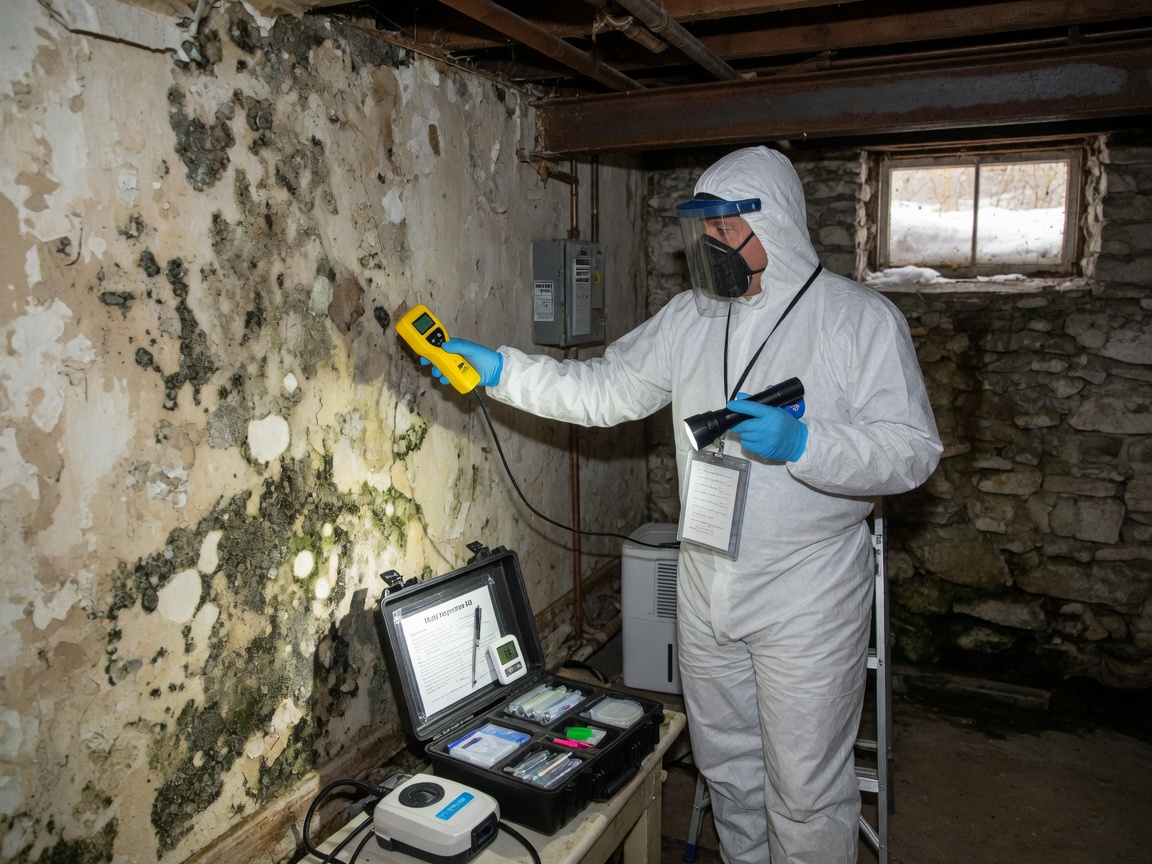
A useful mold inspection does more than confirm that a dark patch exists. We examine where moisture entered, how far it may have traveled and which porous materials are affected. In Buffalo homes, that often means following water from snow-covered roofs, ice-prone eaves, masonry walls, plumbing chases or damp basements. Older houses in Allentown, Elmwood Village and Black Rock can include plaster, wood lath, masonry foundations and layered renovations that conceal damage. In South Buffalo, Lovejoy and Kaisertown, finished basements and enclosed wall cavities can similarly hide moisture until odors or staining appear. The inspection connects visible conditions to a plausible source rather than treating every discoloration as mold.
The inspection may include visual examination, moisture readings and evaluation of ventilation, drainage and condensation patterns. Attics require special attention after Buffalo’s heavy lake-effect snow: warm indoor air leaking around hatches, wiring or bathroom exhausts can condense on cold roof sheathing. Basements near Riverside, Broadway-Fillmore and North Buffalo may show several issues at once, including foundation seepage, plumbing leaks, high humidity and efflorescence. Efflorescence is a mineral deposit, not mold, while soot, deteriorated paint and tannin staining can also resemble fungal growth. Distinguishing these conditions helps avoid unnecessary demolition, although laboratory analysis may be appropriate when the material cannot be identified visually or documentation is needed.
Sampling is not automatically the best first step. A swab, tape lift or air sample represents specific conditions at a particular time, and results can be misleading when there is no clear sampling plan or comparison point. Visible growth combined with a known leak often calls for source correction and a defined remediation scope rather than indiscriminate testing. New York regulates mold assessment and remediation work, including circumstances in which a licensed assessor must prepare the plan and remain independent from the remediation contractor. Property owners should confirm which requirements apply before work begins; a general moisture inspection is not a substitute for a regulated mold assessment when one is required.
We inspect homes and small commercial spaces across Erie County, including University Heights near the Buffalo Niagara Medical Campus and properties around Delaware Park, Canalside and Buffalo City Hall. Service also extends toward Amherst, Cheektowaga and Niagara Falls. The final guidance prioritizes stopping the moisture source, isolating affected areas where appropriate and deciding what can be cleaned versus removed. Nonporous surfaces may sometimes be cleaned, while mold-contaminated drywall, insulation or other absorbent materials frequently require controlled removal. Hours are Monday through Friday, 8am–6pm, and Saturday, 9am–2pm.
Technician insight
In Buffalo, the thing that catches most people out with mold inspection is assuming every winter attic problem is a roof leak. Heavy lake-effect snow can expose roof defects, but indoor air leaking into a cold attic can also create condensation on the sheathing. In older Allentown and Elmwood Village homes, plaster walls and multiple renovation layers can let moisture travel well beyond the first visible stain.
Mold Inspection Services We Offer
✓Whole-Home Mold Inspection
A room-by-room review of accessible living spaces, basement, attic and utility areas to identify visible growth, moisture indicators and conditions that support recurrence.
✓Basement Mold Inspection
Focused evaluation of foundation walls, rim joists, finished wall systems, stored materials and plumbing zones where seepage, condensation and elevated humidity commonly overlap.
✓Attic Mold Inspection
Inspection of accessible roof sheathing, framing, insulation and exhaust routing for staining or growth associated with roof leaks, air leakage and winter condensation.
✓Post-Leak Mold Inspection
Assessment after a plumbing failure, roof leak, appliance overflow or snowmelt intrusion to determine whether materials remain damp and where concealed damage may extend.
✓Pre-Purchase Mold Inspection
A mold- and moisture-focused review that supplements a general home inspection, particularly useful for older Buffalo houses with finished basements, masonry foundations or previous water repairs.
✓Mold Testing and Sampling
Targeted surface or air sampling when results will answer a defined question, support documentation or help distinguish uncertain material. Laboratory fees and sampling limitations are explained before collection.
✓Commercial Mold Inspection
Inspection for offices, retail units, multifamily common areas and other commercial interiors, with attention to roof systems, HVAC-adjacent condensation and tenant-reported odor or moisture patterns.
Mold Inspection Cost in Buffalo, NY
| Service | Typical Range | What Affects It |
|---|---|---|
| Focused Mold Inspection | $150–$350 | Typically covers one limited concern, such as a bathroom, utility area or single leak location; access and documentation needs affect cost. |
| Basement Or Attic Mold Inspection | $250–$500 | Varies with square footage, finished assemblies, safe access and the number of moisture pathways that must be evaluated. |
| Whole-Home Mold Inspection | $400–$800 | Property size, multiple structures, occupied storage areas and the depth of written reporting can move the price. |
| Surface Or Air Sampling | $75–$175 Per Sample | Usually added to an inspection; laboratory charges, sample type, controls and expedited turnaround affect the total. |
| Commercial Mold Inspection | Custom Quote | Based on building area, number of units or zones, access restrictions, reporting requirements and sampling plan. |
Ranges are typical for Buffalo, NY and confirmed with an exact written quote before any work starts.
How it works
- 1
Discuss The Moisture History
We review odors, staining, prior leaks, snow or roof events, plumbing problems, basement seepage and any areas that occupants have already opened or cleaned.
- 2
Inspect Accessible Areas
The inspection follows likely moisture pathways through rooms, basements, attics and utility spaces while noting visible growth, damaged finishes, ventilation defects and relevant building materials.
- 3
Check Moisture Conditions
Non-destructive moisture readings and humidity observations help identify damp materials and decide whether a limited access opening or further investigation is justified.
- 4
Sample Only When Useful
If testing can answer a specific question, suitable surface or air samples are discussed. Sampling is not presented as a substitute for correcting visible water damage.
- 5
Explain Findings And Next Steps
You receive a practical summary of observed conditions, likely moisture sources and recommended priorities, including whether regulated assessment or a separate remediation plan may be required.
Pricing
Inspection cost depends on property size, the number of suspect areas, attic or crawlspace access, documentation requirements and whether laboratory sampling is appropriate. Focused inspections generally cost less than whole-building evaluations; testing and lab analysis are normally additional. A quote should define the inspection area and deliverables before the visit.