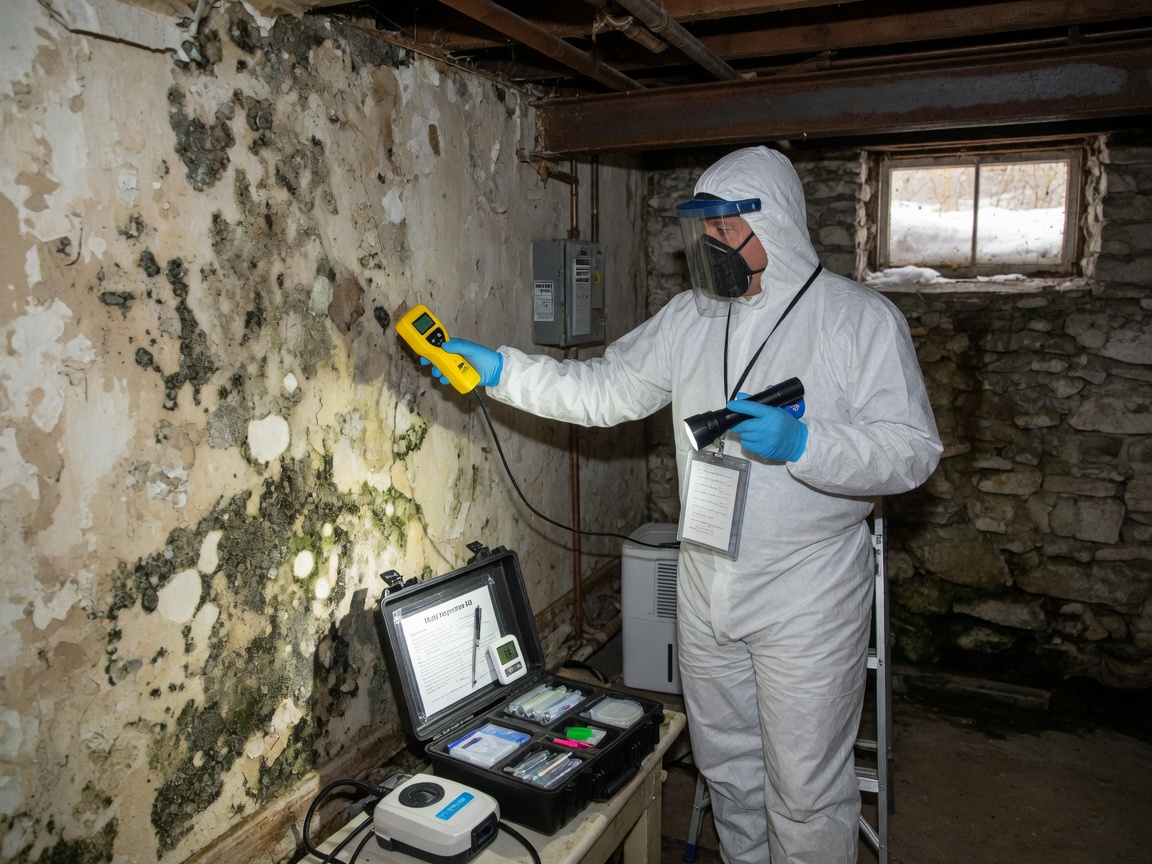
Mold Remediation Buffalo serves Springville properties throughout ZIP code 14141, including homes near Main Street, Fiddlers Green Park and the Springville-Griffith Institute campus. The village’s older houses often have stone or block foundations, enclosed porches, compact basements and additions built in different eras. Those features can conceal moisture behind finished walls, beneath flooring or around foundation transitions. Our mold remediation Buffalo NY service focuses on identifying the damp materials and moisture source before defining the removal area, rather than treating visible staining as the entire problem.
Springville’s position in southern Erie County creates different moisture pressures than Buffalo neighborhoods such as Elmwood Village, Black Rock or South Buffalo. Heavy lake-effect snow can accumulate around foundations and roof edges; subsequent thaws may expose flashing defects, ice-related leaks, wet attic insulation or basement seepage. Homes outside the village center may also have longer driveways, wells, septic systems and wooded lots that affect access and humidity. We plan mold removal Buffalo NY work around those conditions, with attention to containment, material handling and the source of recurring moisture.
Springville is farther south than Cheektowaga, Amherst and Niagara Falls, so scheduling and site preparation account for Southtowns weather rather than assuming conditions match the Buffalo urban core. Service is available Monday through Friday from 8am to 6pm and Saturday from 9am to 2pm. Whether the concern follows a roof leak near Route 39, basement dampness around the village center or prolonged humidity in a rural Concord property, the next step is to inspect affected spaces and establish a practical remediation scope.
Around * Springville
We regularly work near:
- 📍Fiddlers Green Park
- 📍Springville Center for the Arts
- 📍Bertrand Chaffee Hospital
- 📍Springville-Griffith Institute High School
- 📍Main Street (New York State Route 39)
Mold Remediation Buffalo NY in * Springville — Local Notes
- •Older homes around Main Street and the village center may combine original foundations with later additions. Mold checks should include sill areas, foundation transitions, enclosed porches and finished basement walls where moisture can remain hidden.
- •Springville receives substantial lake-effect snow. Roof-edge ice, wind-driven snow and thaw cycles can wet attic insulation, sheathing and wall cavities even when the interior stain appears small.
- •Properties beyond the compact village blocks may have wooded surroundings, longer access routes and less exposed foundation area. Shade and limited airflow can slow drying around crawlspaces, basements and exterior walls.
- •Basement remediation should address why materials became damp. Snow piled near foundations, poorly directed downspouts and seasonal seepage can cause mold to return if moisture control is omitted.