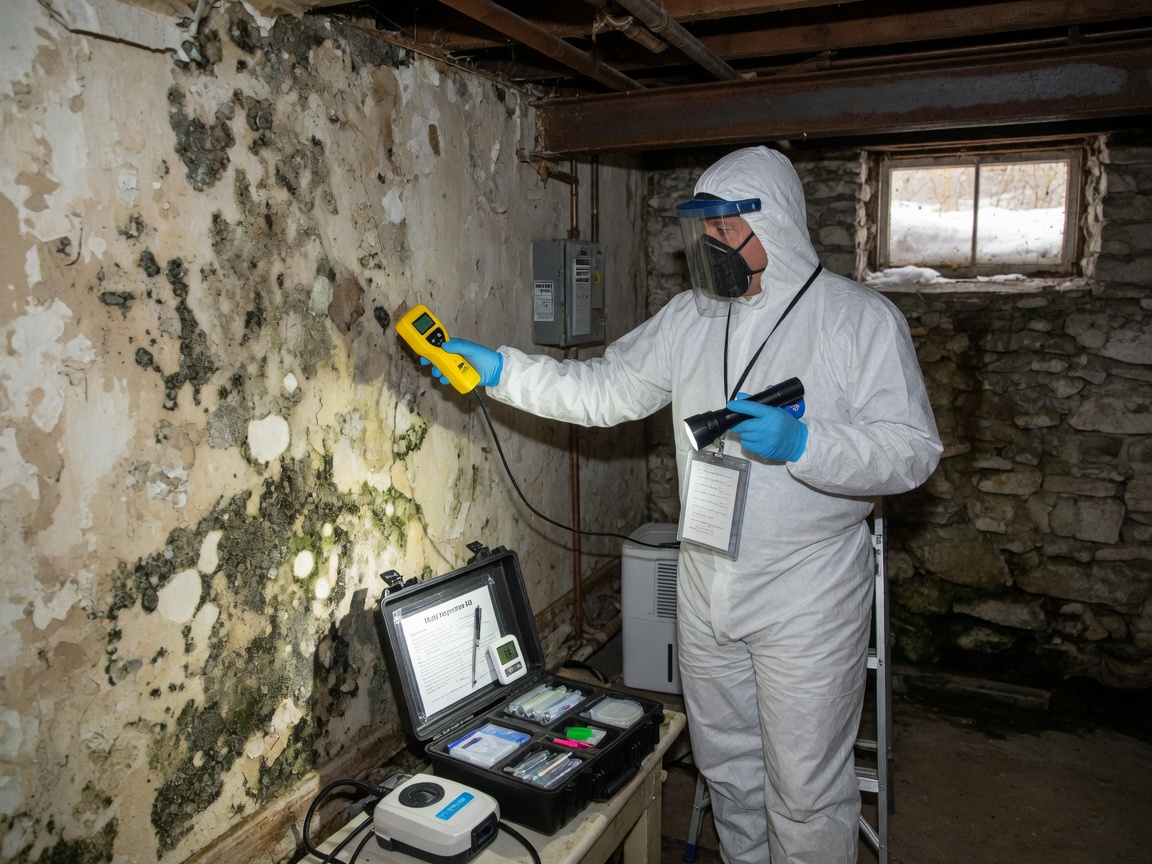
Mold Remediation Buffalo provides mold remediation in Lancaster, NY, including homes near Broadway, Central Avenue, Como Lake Park and Cayuga Creek. Older village houses often have stone or masonry basements, enclosed porches and additions where moisture can remain hidden behind finishes. Lancaster’s humid summers and Erie County’s heavy lake-effect snow also create seasonal trouble: roof leaks, attic condensation and snowmelt entering foundation walls. Each project begins by identifying the moisture path and affected materials rather than treating visible staining as the whole problem.
Lancaster includes compact village properties as well as larger lots and newer subdivisions farther from the Broadway corridor. That mix changes containment, equipment placement and material access. A tight basement stairway near the village center requires a different plan than an attached garage, finished lower level or open attic near Pleasant View Drive. Mold removal in Lancaster, NY may involve isolating affected rooms, removing materials that cannot be adequately cleaned and addressing moisture conditions that could allow growth to return.
Based in the Buffalo service region, the business serves Lancaster and surrounding Erie County communities, including nearby Cheektowaga and Amherst, with Niagara Falls farther northwest. Lancaster properties face different conditions than dense Buffalo neighborhoods such as Allentown, Elmwood Village, Black Rock or South Buffalo: lots are often broader, but creek drainage, snow accumulation and basement seepage remain important concerns. Appointments are available Monday through Friday from 8am–6pm and Saturday from 9am–2pm.
Around * Lancaster
We regularly work near:
- 📍Como Lake Park
- 📍Lancaster Opera House
- 📍Cayuga Creek
- 📍Broadway (US Route 20)
- 📍Central Avenue
- 📍Lancaster High School
Mold Remediation Buffalo NY in * Lancaster — Local Notes
- •Older Village of Lancaster homes around Broadway and Central Avenue may have masonry foundations, low basement clearances and multiple generations of wall or ceiling finishes. Mold remediation planning should account for concealed cavities and limited removal access.
- •Cayuga Creek and low-lying drainage patterns make water entry and prolonged basement dampness important concerns after heavy rain or rapid snowmelt. Drying the surface alone does not resolve moisture held in masonry, framing or finished basement walls.
- •Heavy lake-effect snow can expose roof, flashing and attic ventilation problems. Mold found on roof sheathing may be connected to winter condensation, ice-related leakage or warm indoor air escaping into the attic.
- •Lancaster’s humid summer weather can keep basements damp even without an obvious flood. Dehumidification, drainage checks and inspection around utility penetrations are often relevant to preventing recurring growth.