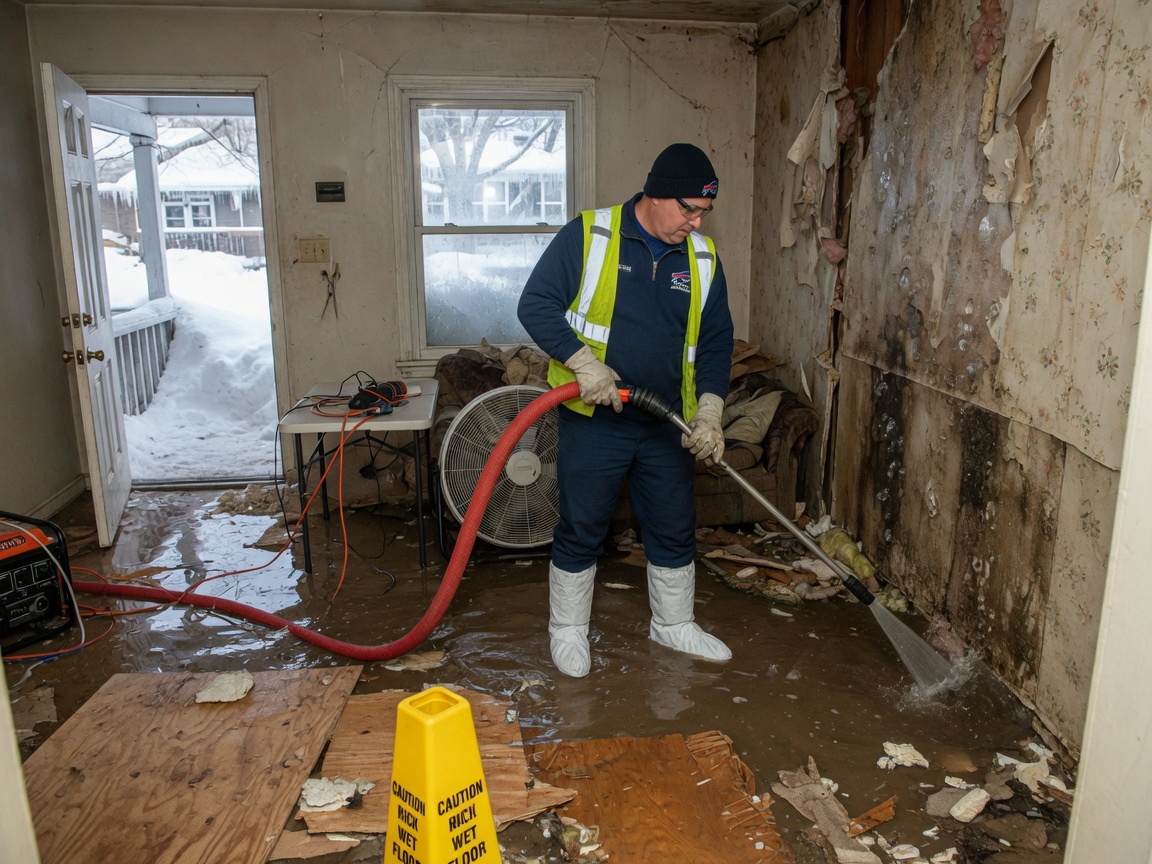
Mold Remediation Buffalo serves Gowanda properties where moisture problems are shaped by Cattaraugus Creek, Thatcher Brook and Western New York’s humid continental climate. Heavy lake-effect snow can leave roofs, foundations and basements exposed to prolonged moisture as accumulated snow melts. In homes along Main Street, Buffalo Street and nearby residential blocks, mold remediation often begins by tracing water from foundation seepage, plumbing failures, roof leaks or condensation rather than treating visible growth alone. The affected materials and moisture source determine whether cleaning, removal or further repairs are appropriate.
Gowanda’s established housing includes older homes with stone or masonry foundations, enclosed wall cavities, unfinished basements and additions completed at different times. These features can hide moisture behind paneling, beneath flooring or around sill areas. Access also varies: narrow basement stairs, occupied rooms and closely spaced buildings can influence containment and material handling. Mold removal in Gowanda, NY is therefore planned around the building itself, with attention to damp materials, airflow and practical access rather than a one-size-fits-all approach.
Gowanda sits on the Erie and Cattaraugus county line, making it distinct from Buffalo neighborhoods such as South Buffalo, Lovejoy or Riverside. Service is available during posted hours of Monday through Friday, 8am–6pm, and Saturday, 9am–2pm. For property owners comparing mold remediation Buffalo NY services from Gowanda, the important first step is explaining where moisture appeared, whether flooding or a leak occurred, and how long materials may have remained wet. The broader service region also reaches toward Cheektowaga, Amherst and Niagara Falls.
Around * Gowanda
We regularly work near:
- 📍Cattaraugus Creek
- 📍Thatcher Brook
- 📍Gowanda High School
- 📍Gowanda Middle School
- 📍Gowanda Free Library
- 📍Main Street
Mold Remediation Buffalo NY in * Gowanda — Local Notes
- •Cattaraugus Creek and Thatcher Brook make water history especially important in Gowanda. After high water, seepage or a wet basement, porous drywall, insulation, carpet backing and stored cardboard should be assessed rather than relying on surface wiping alone.
- •Heavy lake-effect snow can create delayed moisture problems. Roof leaks, ice-related intrusion and foundation dampness may become apparent during thaw periods, while closed winter windows can increase condensation in attics, bathrooms and poorly ventilated rooms.
- •Older Gowanda houses may have stone or masonry foundation walls, low basement clearances and multiple generations of wall or floor finishes. Mold removal planning must account for concealed cavities and safe access to affected materials.
- •Buildings near the village’s compact Main Street corridor can have tighter loading and material-removal access than properties on less dense residential blocks. Containment placement and debris routes should be planned before disturbance begins.