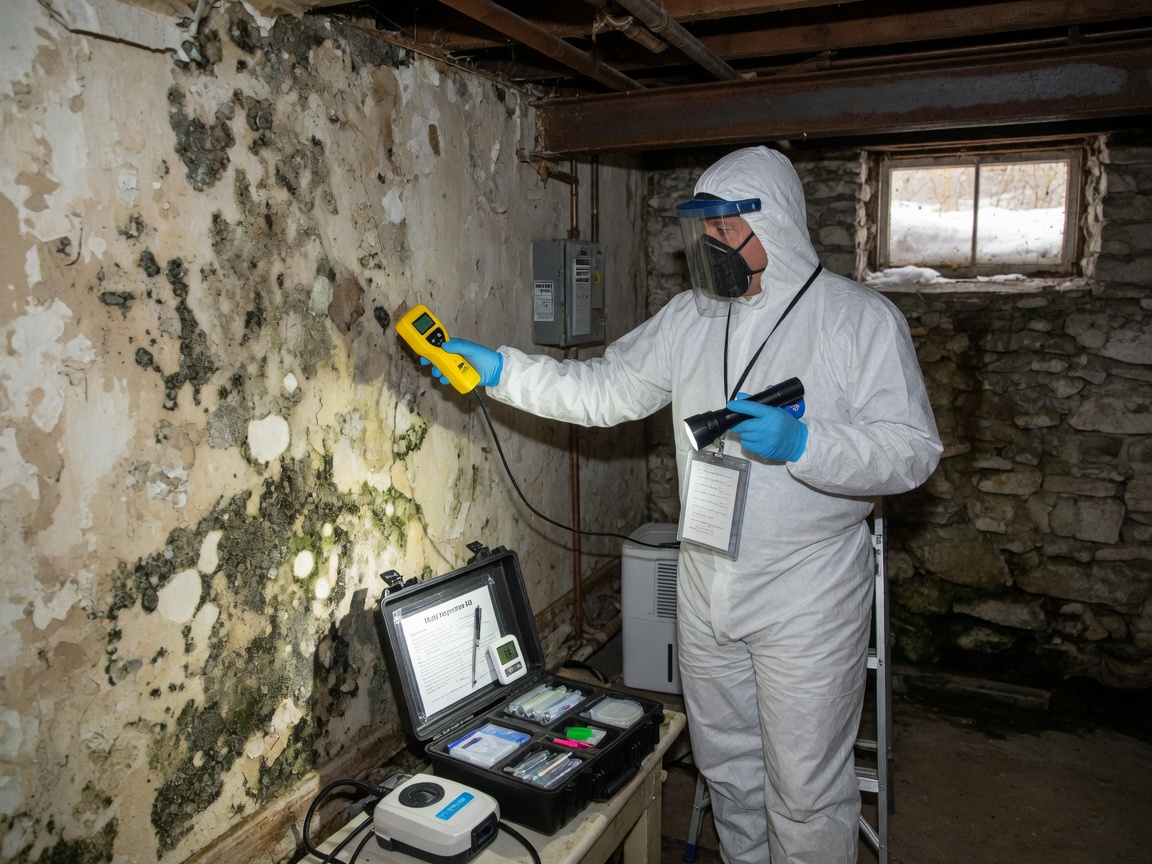
Concord sits in southeastern Erie County, outside Buffalo proper, with wooded hills, rural roads and homes spread along NY-240, Genesee Road and nearby side streets. Mold work here often begins in stone or block basements, low crawlspaces and additions where damp air or groundwater persists. Heavy lake-effect snow adds another concern: roof leaks, ice-related moisture and spring snowmelt can leave framing, insulation and stored materials wet long after the visible water is gone. Mold Remediation Buffalo assesses the moisture source before planning removal.
Properties around East Concord and the Erie County Forest require a different approach than tightly packed homes in Allentown, Elmwood Village or Broadway-Fillmore. Longer driveways, private wells, septic systems, wooded lots and limited basement access can affect equipment placement and containment. We provide mold remediation in Concord, NY, with attention to concealed growth behind finished basement walls, beneath attic insulation and around older window or roof openings. Hours are Monday through Friday, 8am–6pm, and Saturday, 9am–2pm.
Our wider Erie County service area reaches Buffalo neighborhoods such as South Buffalo, North Buffalo, Black Rock, Riverside, Lovejoy, Kaisertown and University Heights, as well as Amherst, Cheektowaga and Niagara Falls. For Concord properties, however, the job plan reflects the area’s heavier snow exposure, sloping land and rural housing patterns rather than a city template. Mold removal in Concord may involve separating affected porous materials, cleaning salvageable surfaces and addressing the leak, condensation or drainage condition that allowed growth to develop.
Around * Concord
We regularly work near:
- 📍Erie County Forest
- 📍Concord Town Park
- 📍Kissing Bridge
- 📍NY Route 240
- 📍Genesee Road
- 📍Foote Road
Mold Remediation Buffalo NY in * Concord — Local Notes
- •Older Farmhouses And Rural Homes: Concord has a mix of older rural houses, farm properties and later homes. Stone foundations, fieldstone joints, unlined crawlspaces and basement additions can hold moisture in places that are difficult to inspect or isolate.
- •Lake-Effect Snow And Snowmelt: Deep winter accumulation can expose roof edges, attic sheathing and foundation walls to prolonged moisture. Inspections should consider both active leaks and materials that stayed damp after an earlier thaw.
- •Wooded And Sloped Lots: Properties near the Erie County Forest and along Concord’s rolling terrain may receive runoff toward lower foundation walls. Dense shade can also slow drying around siding, decks and crawlspace vents.
- •Rural Access: Long driveways and dispersed homes can affect where containment equipment and debris handling are staged, especially when snowbanks or muddy spring conditions restrict access.