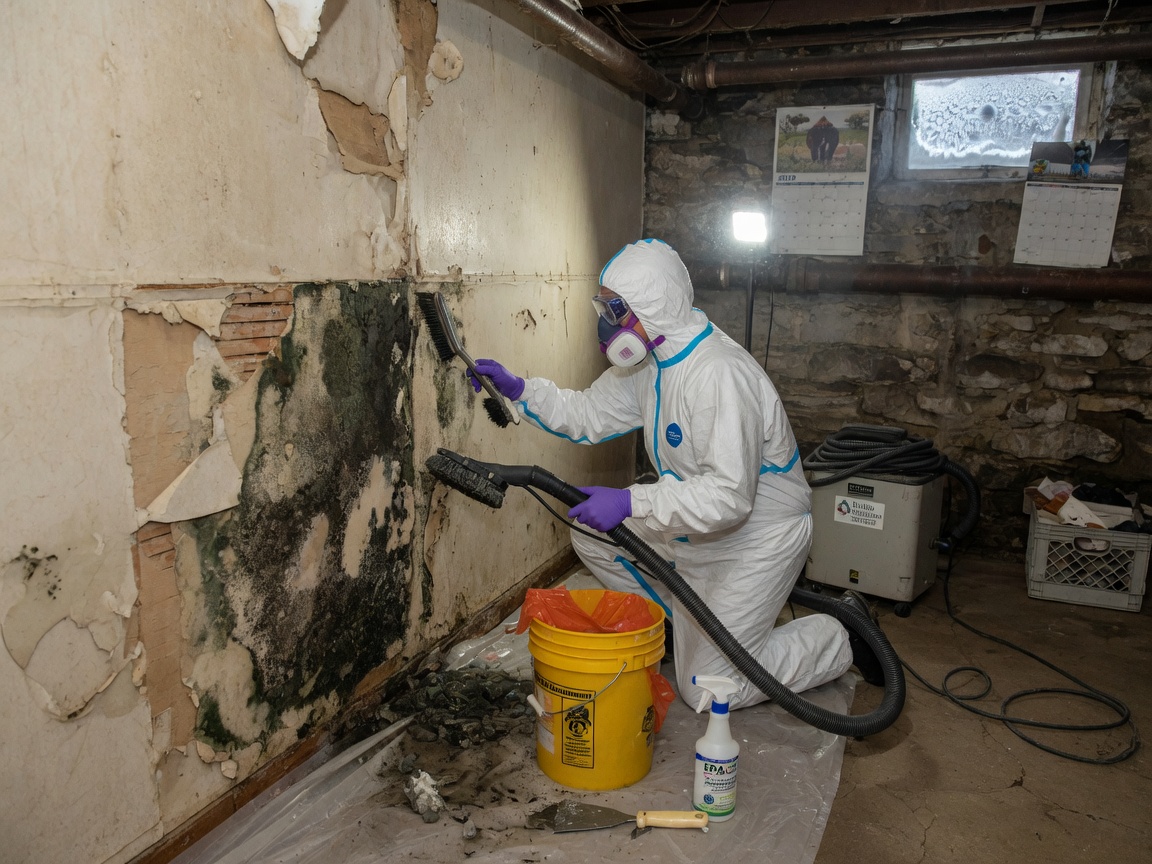
Mold Remediation Buffalo serves Boston, NY, including homes along Boston State Road, Zimmerman Road and the rural roads surrounding Boston Valley. Properties here differ from denser Buffalo neighborhoods such as South Buffalo and Kaisertown: lots are generally larger, homes are farther apart, and foundations may include basements, crawlspaces or additions built at different times. Mold remediation in Boston, NY therefore starts with the building itself—where moisture entered, how enclosed spaces are ventilated and whether affected materials can be cleaned or must be removed.
Boston’s rolling terrain, wooded parcels and proximity to Eighteen Mile Creek can create drainage and humidity concerns that vary from one property to the next. Erie County’s humid summers can keep basements damp, while heavy lake-effect snow may collect around foundations and roof edges. When temperatures rise, snowmelt can expose foundation seepage, roof leaks or wet insulation. Our work focuses on containing affected areas, removing contaminated porous materials where necessary, cleaning suitable surfaces and addressing the moisture conditions that allowed growth to develop.
Access also shapes mold removal in Boston, NY. Rural driveways, detached garages and tight attic or crawlspace openings require more planning than closely spaced homes in Allentown or Elmwood Village. We account for equipment placement, containment routes and occupied areas before work begins. Service hours are Monday through Friday from 8am to 6pm and Saturday from 9am to 2pm, with straightforward recommendations based on visible conditions and the source of moisture—not a one-size-fits-all treatment.
Around * Boston
We regularly work near:
- 📍Boston Town Hall
- 📍Boston Town Park
- 📍Boston Valley Elementary School
- 📍Boston State Road (NY 391)
- 📍Eighteen Mile Creek
Mold Remediation Buffalo NY in * Boston — Local Notes
- •Basements And Crawlspaces: Boston’s mix of older farmhouses, mid-century homes and newer rural houses can include stone, block or poured-concrete foundations. Each construction type requires a different approach to seepage, air movement and cleaning.
- •Snowmelt And Roof Moisture: Heavy lake-effect snow can conceal roof or flashing problems. Wet attic insulation and roof sheathing should be evaluated after the leak or ice-related moisture source is corrected.
- •Rural Lot Drainage: Sloped and wooded parcels around Boston Valley may direct runoff toward foundations, especially where gutters, grading or perimeter drainage are not moving water away effectively.
- •Work-Area Access: Long driveways, detached outbuildings and small crawlspace entries can affect containment setup, debris removal and equipment positioning.